
News

Patrick Webb will join Cornell as the inaugural executive director of the Ashley School of Global Development and the Environment in the College of Agriculture and Life Sciences.
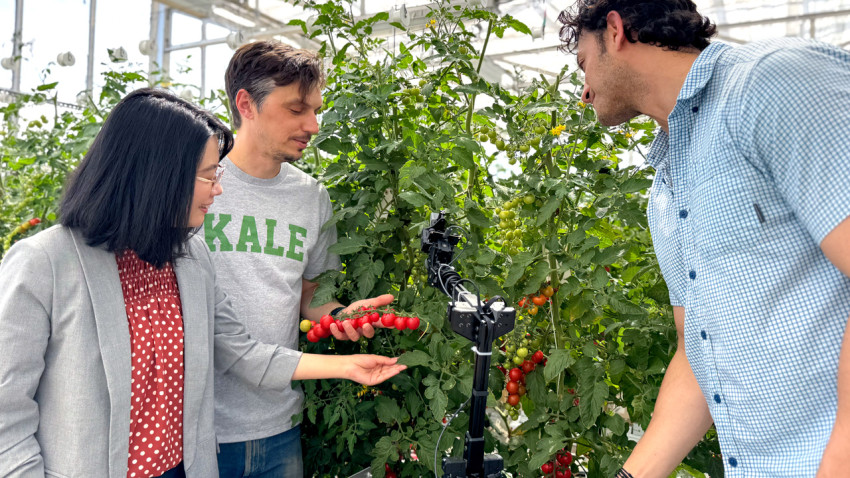
Cornell Atkinson has awarded $900k to support six new research projects that seek to protect coral reefs, improve greenhouse agriculture and understand whether wildfires affect disease spread.
Students from Buffalo's McKinley High School — home to one of the few high-school horticulture programs in New York state — visited Cornell May 19 to view the work of the Center for Research on Programmable Plant Systems (CROPPS).
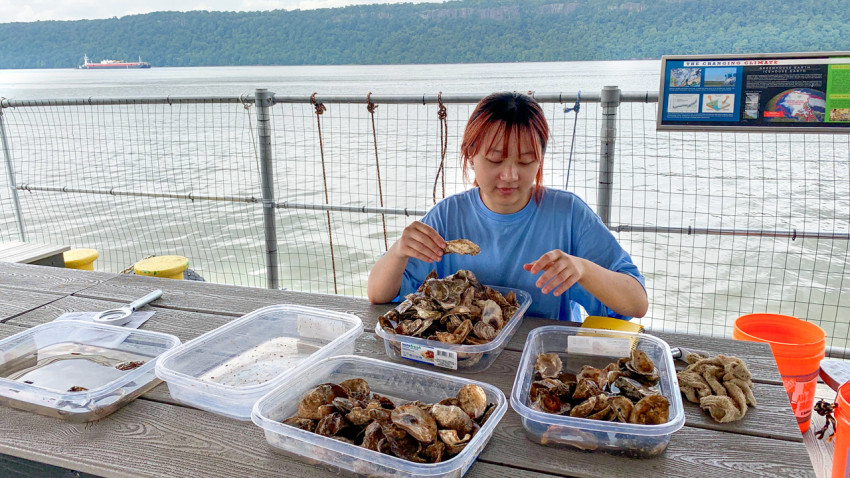
A new study offers genetic evidence and proof that farmed eastern oysters are adding to and breeding with wild eastern oyster populations in the western and central Long Island Sound.

Schwartz Research Fund Visionary Grants for faculty members in the life sciences aims to provide significant assistance for innovative, visionary research that opens an important new line of inquiry.
The 2026 joint symposium hosted by the Cornell Center for Vertebrate Genomics and the Cornell Center for Immunology took play in May bringing together early-career researchers and Cornell faculty working across genetics, immunology, developmental biology and computational biology.

Dr. Jessica McArt, DVM ’07, Ph.D. ’13, has been named the Austin O. Hooey Dean of the College of Veterinary Medicine.

As the class of 2026 graduates in Arts & Sciences, we celebrate their extraordinary journeys.

The new freezing method – 30 times faster than current protocols – could be used to improve assisted reproduction in humans or animals or to conserve biodiversity.
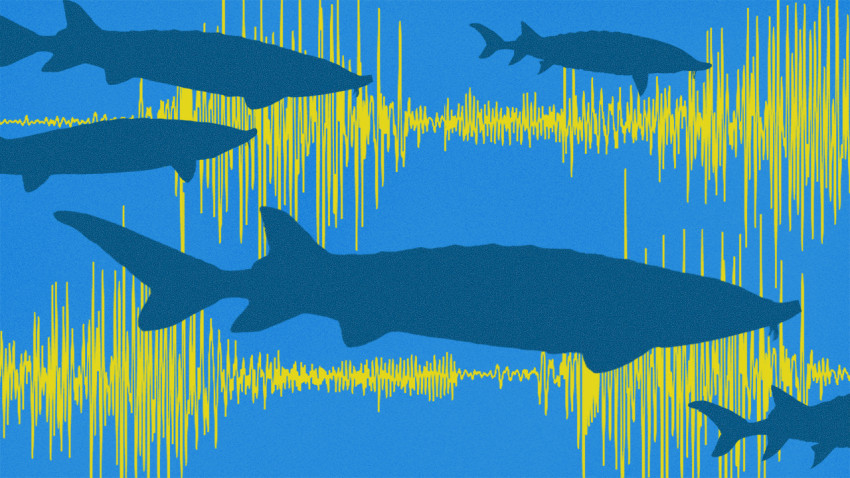
The finding gives New York state another tool to locate and understand the behavior of the endangered Atlantic sturgeon, an iconic species decimated by overfishing.

Cornell researchers developed a safer and more precise way to study how genes function in living tissues by refining a recently developed CRISPR-based genetic technique in fruit flies, enabling researchers to better study how genes contribute to development and disease.